
The second most difficult issue was how the client starts work with the chosen candidate. I can simply follow the industry leader’s steps, but I do not think Upwork’s Client-to-Work process is really user-friendly or efficient. This is a topic for the next post.

The table above shows the steps of Upwork’s Client-to-Work process. As a creative professional and also as a software developer, I have used Upwork both to hire other developers and to work as a freelancer.
As a client, the process from posting the job to working with the hired freelancer on Day 1 was truly frustrating. The process was simply too long. The concepts of the contract and escrow make complete sense for the safety of both the client and the talent. But yes, the UX and layers of safety are like a double-edged sword.
Estimating the time spent on the Upwork “Client-to-Work” flow involves two distinct phases with very different timelines: Pre-Hire Time and In-Contract Time.
While Upwork aims to make the final steps (Offer to Start Work) very fast, the overall hiring cycle is highly variable.
Here is an estimate of the time spent at each stage, based on industry data and user reports:
1. Pre-Hire Time (From Job Post to Contract Acceptance)
This phase is the most variable, as it is driven by client review habits, proposal quality, and the complexity of the job.
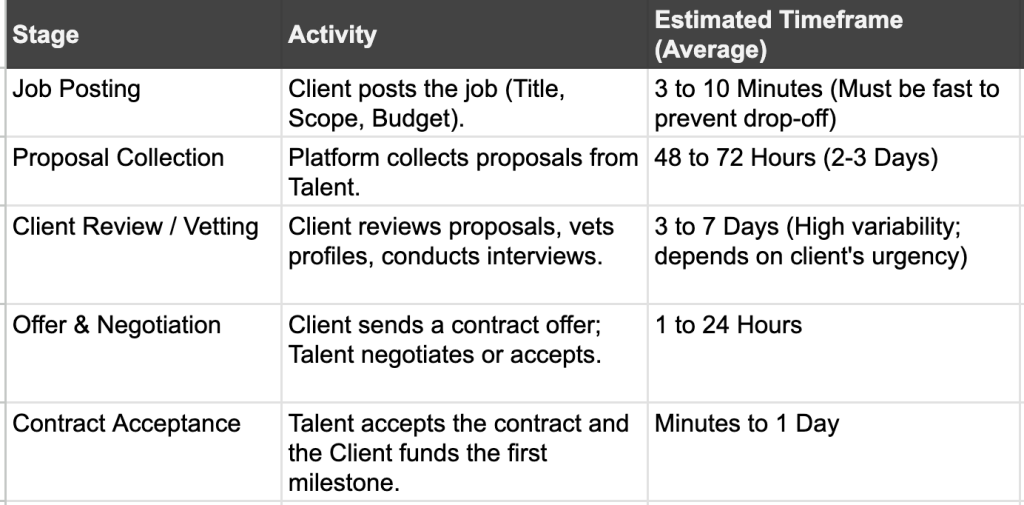
Total Estimated Pre-Hire Time: The industry average is often cited as 3 to 7 days from posting to the start of work, though highly motivated clients using AI screening features can achieve a start time in under 24 hours.
2. In-Contract Time (Milestone Payout Flow)
This phase is highly predictable and driven by strict platform rules designed to protect both parties.
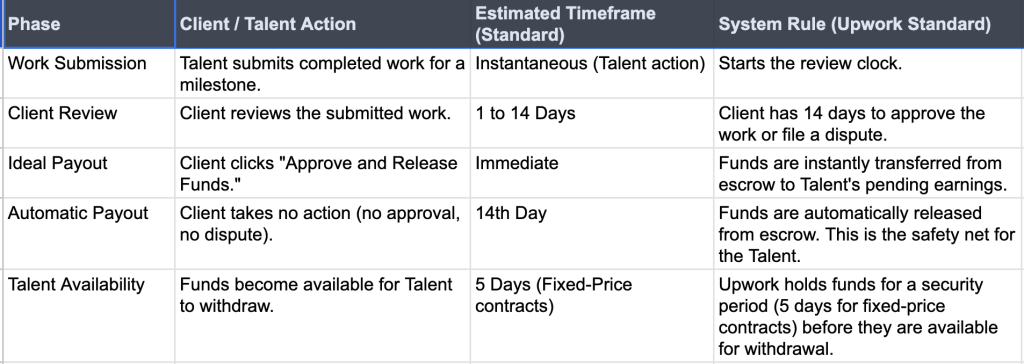
Key Takeaway
The most time-consuming step is the Client Review/Vetting process.